
The aim of the present study was to evaluate the performance of two pre-hydrolyzed aluminum coagulants (PAX-XL6 and PAX-XL8) in comparison with aluminum sulfate (alum) for surface water clarification. Jar-test experiments were conducted with coagulant doses ranging from 0 to 15 mg Al/L to determine the optimal dose. Results demonstrated that both the coagulant type and dosage strongly influenced clarification performance. The pre-hydrolyzed coagulants achieved the bests results, with maximum color removal efficiencies of 91.8% and turbidity removals of 89.3% (PAX-XL6) and 84.6% (PAX-XL8) at an optimal coagulant dose of 4 mg Al/L. In contrast, alum showed the lowest clarification performance, achieving maximum color removal of 87.5% and turbidity removal of 80.3%. At 4 mg Al/L, the pre-hydrolyzed coagulants met WHO drinking water guidelines for color and turbidity, whereas alum failed to meet color standard. Beyond 8 mg Al/L, all coagulants exhibited a decrease in clarification efficiency due to colloid restabilization. Regarding water chemistry, PAX-XL6 and PAX-XL8 induced only moderate reductions in pH and alkalinity, whereas alum caused significant acidification and a marked decrease in alkalinity. None of the coagulants affected water hardness. Overall, the pre-hydrolyzed coagulants demonstrated superior clarification performance and reduced chemical impact, confirming their potential as efficient and sustainable alternatives to alum for surface water treatment.
| Published in | American Journal of Environmental Protection (Volume 14, Issue 6) |
| DOI | 10.11648/j.ajep.20251406.15 |
| Page(s) | 305-311 |
| Creative Commons |
This is an Open Access article, distributed under the terms of the Creative Commons Attribution 4.0 International License (http://creativecommons.org/licenses/by/4.0/), which permits unrestricted use, distribution and reproduction in any medium or format, provided the original work is properly cited. |
| Copyright |
Copyright © The Author(s), 2025. Published by Science Publishing Group |
Pre-hydrolyzed Coagulants, Aluminum Sulfate (alum), Coagulation, Clarification, Color Removal, Turbidity Removal, Drinking Water, Surface Water Treatment
Coagulant | Concentration of stock solution (g Al/L) |
|---|---|
ALS (Aluminum Sulfate - alum) | 57.6 |
PAX-XL6 (Poly-aluminum Chloride 6) | 66.4 |
PAX-XL8 (Poly-aluminum Chloride 8) | 68.2 |
Parameter | Raw water | WHO standards * |
|---|---|---|
pH | 5.62 - 5.97 | 6.5 < pH < 8.5 |
Turbidity (NTU) | 7.81 | < 5 |
Color (Pt-Co) | 171.5 | < 15 |
Alkalinity (mg CaCO3/L) | 32 | - |
Water hardness (mg CaCO3/L) | 29 | - |
Coagulant | Optimal dose (mgAl/l) | Residual color (Pt-Co) | Residual turbidity (NTU) |
|---|---|---|---|
PAX - XL6 | 4 | 14 | 0,8 |
PAX - XL8 | 4 | 14 | 1,2 |
Alum | 4 | 21,5 | 1,5 |
PAX-XL6 | Polyaluminium Chloride 6 |
PAX-XL8 | Polyaluminium Chloride 8 |
Alum (ALS) | Aluminium Sulfate |
WHO | World Health Organization |
CEAEQ | Centre d’Expertise en Analyses Environnementales du Quebec |
EDTA | Ethylenediaminetetraacetic Acid |
| [1] | Kazza, S Optimization of direct filtration at the Atwater and Charles-J. Des Baillets. Master Thesis, Polytechnique Montréal, 2015. |
| [2] | Maroli, A. S., Zhang, Y., Lubiantoro, J., Venkatesan A. K Surfactant-enhanced coagulation and flocculation improve the removal of perfluoroalkyl substances from surface water, Environmental Sciences: Advances 2024, 3, 1714-1721, |
| [3] | Dihang, M. D. Coagulation and flocculation mechanism of diluted clay suspensions encountered in water treatment, PhD. Thesis, University of Toulouse, III-Paul Sabatier, 2007. |
| [4] | Rigobello, E. S., Dantas, A. D., Di Bernardo, L., Vieira, E. M. Influence of the Apparent Molecular Size of Aquatic Humic Substances on Color Removal by Coagulation and Filtration, Environmental Technology 2011, 33(15), 1767-1777, |
| [5] | Nowacka, A., Włodarczyk-Makuła, M., Macherzyński, B. Comparison of effectiveness of coagulation with aluminum sulfate and pre-hydrolyzed aluminum coagulants. Desalination and Water Treatment 2011, 52, 3843-3851. |
| [6] | Bratby, J. Coagulation and flocculation in water and wastewater treatment. 3nd Ed. IWA Publishing, London, 2016. |
| [7] | Nnaji, P. C.. An Investigation of the Performance of Various Coagulants/Flocculants in Removing the Turbidity of Coal Washery Effluents. Master Thesis, Federal University of Technology, Owerri, 2012. |
| [8] | Jin, Y. Use of high-Resolution Photographic Technique for studying Coagulation/flocculation in water treatment. Master Thesis, University of Saskatchewan, Saskatoon, Canada, 2005. |
| [9] | Ma J., Li, G. B., Chen, Z. L., Xu, G. R., Cai, G. Q. Enhanced coagulation of surface waters with high organic content by permangantate preoxidation Available to Purchase. Water Supply 2001, 1 (1), 51-61. |
| [10] | Carleton, G., Al Daach, H., Cutright, T. J. Laboratory evaluation of alum, ferric and ferrous-water treatment residuals for removing phosphorus from surface water. Heliyon, 2020, 6, e04681. |
| [11] | El-taweel, R. M., Mohamed, N., Alrefaey, K. A., Husien, S., Abdel-Aziz, A. B. A review of coagulation explaining its definition, mechanism, coagulant types, and optimization models; RSM, and ANN, Current Research in Green and Sustainable Chemistry 2023, 6, p. 100358. |
| [12] | Song, X., Yan, H., Shen, Q., Sun, W., Liab, P. Treatment of water discharged from a Yellow River water purification plant: optimization and application of enhanced coagulation technology. RSC Advances 2025., 15, 17476. |
| [13] | Lei, G., Ma, J., Guan, X., Song, A. Cui, Y. Effect of basicity on coagulation performance of polyferric chloride applied in eutrophicated raw water. Desalination and Water Treatment 2009, 247, 518-529. |
| [14] | Pernitsky, D., Edzwald, J. K. Solubility of polyaluminum coagulants. Journal of Water Supply: Research and Technology - AQUA 2003, 52, 395-406. |
| [15] | Krupińska, I. Effect of temperature and pH on the effectiveness of pollutant removal from groundwater in the process of coagulation. Ochrona Środowiska 2025, 37, 35-42. |
| [16] | Pernitsky, D. Edzwald, J. Selection of alum and polyaluminum coagulants: principles and applications. Journal of Water Supply: Research and Technology - AQUA 2006, 55, 121-141. |
| [17] | Sinha, S., Yoon, Y., Amy, G., Yoon, J. Determining the effectiveness of conventional and alternative coagulants through effective characterization schemes. Chemosphere 2004, 57, 1115-1122. |
| [18] | Guminska, J., Kłos, M. Analysis of post-coagulation properties of flocs in terms of coagulant choice, Environ. Protect. Eng. 2012, 38, 103-113. |
| [19] | Mccurdy, K., Carlson, K., Gregory, D. Floc morphology and cyclic shearing recovery: Comparison of alum and polyaluminum chloride coagulants, Water Res. 2004, 38, 486 - 494. |
| [20] | Krupińska I. The effect of the type of hydrolysis of aluminum coagulants on the effectiveness of organic substances removal from water. Desalination and Water Treatment 2020, 186: 171-180. |
| [21] | CEAEQ (Centre d’Expertise en Analyse Environnementale du Quebec). Determination of true color in water: automated colorimetric method with platinum-cobalt. MA. 103 - Col. 1.0, Rev. 3, Ministry of sustainable development, environment and parks of Quebec 2007, 9p. |
| [22] | WHO (World Health Organization). Guidelines for drinking-water quality, 4th ed, incorporating the 1st addendum, WHO Press, Geneva, 2017. |
| [23] | Patel, H., Vashi, R. T. Comparison of naturally prepared coagulants for removal of COD and color from textile wastewater. Global NEST Journal 2013, 15(4), 522-528. |
| [24] | Saritha, V., Srinivas, N., Srikanth Vuppala, N. V. Analysis and optimization of coagulation and flocculation process. Applied. Water Science 2017, 7(1), 451-460. |
| [25] | Sheng, D. P. W., Bilad, M. R., Shamsuddin, N. Assessment and optimization of coagulation process in water treatment plant: a review. ASEAN Journal of Science and Engineering 2023, 3(1), 79-100. |
| [26] |
Al-Anzi, B. S., Naik, M., Ahmad, M. The Imperative Need of Metal Salt for the Treatment of Industrial Wastewater via the Synergic Coagulation-Flocculation Method. Polymers 2022, 14, 1651.
https://doi.org/10.3390/ polym14091651 |
| [27] | Lapointe, M., Papineau, I., Peldszus, S., Peleato, N., Barbeau, B. Identifying the best coagulant for simultaneous water treatment objectives: Interactions of mononuclear and polynuclear aluminum species with different natural organic matter fractions. Journal of Water Process Engineering 2021, 40, 101829. |
| [28] | Cao, B., Gao, B., Liu, X., Wang, M., Yang, Z., Yue Q. The impact of pH on floc structure characteristic of polyferric chloride in a low DOC and high alkalinity surface water treatment. Water Research 2011, 45, 6181-6188. |
| [29] | Dąbrowska, L. Removal of organic matter from surface water using coagulants with various basicity. Journal of Ecological Engineering 2016, 17, 66-72. |
APA Style
Seyhi, B., Sangare, K., Kouadio, G. K. (2025). A Comparative Study of Pre-hydrolysed Coagulants and Alum in Surface Water Clarification. American Journal of Environmental Protection, 14(6), 305-311. https://doi.org/10.11648/j.ajep.20251406.15
ACS Style
Seyhi, B.; Sangare, K.; Kouadio, G. K. A Comparative Study of Pre-hydrolysed Coagulants and Alum in Surface Water Clarification. Am. J. Environ. Prot. 2025, 14(6), 305-311. doi: 10.11648/j.ajep.20251406.15
AMA Style
Seyhi B, Sangare K, Kouadio GK. A Comparative Study of Pre-hydrolysed Coagulants and Alum in Surface Water Clarification. Am J Environ Prot. 2025;14(6):305-311. doi: 10.11648/j.ajep.20251406.15
@article{10.11648/j.ajep.20251406.15,
  author = {Brahima Seyhi and Kassoum Sangare and Georges Kouame Kouadio},
  title = {A Comparative Study of Pre-hydrolysed Coagulants and Alum in Surface Water Clarification},
  journal = {American Journal of Environmental Protection},
  volume = {14},
  number = {6},
  pages = {305-311},
  doi = {10.11648/j.ajep.20251406.15},
  url = {https://doi.org/10.11648/j.ajep.20251406.15},
  eprint = {https://article.sciencepublishinggroup.com/pdf/10.11648.j.ajep.20251406.15},
  abstract = {The aim of the present study was to evaluate the performance of two pre-hydrolyzed aluminum coagulants (PAX-XL6 and PAX-XL8) in comparison with aluminum sulfate (alum) for surface water clarification. Jar-test experiments were conducted with coagulant doses ranging from 0 to 15 mg Al/L to determine the optimal dose. Results demonstrated that both the coagulant type and dosage strongly influenced clarification performance. The pre-hydrolyzed coagulants achieved the bests results, with maximum color removal efficiencies of 91.8% and turbidity removals of 89.3% (PAX-XL6) and 84.6% (PAX-XL8) at an optimal coagulant dose of 4 mg Al/L. In contrast, alum showed the lowest clarification performance, achieving maximum color removal of 87.5% and turbidity removal of 80.3%. At 4 mg Al/L, the pre-hydrolyzed coagulants met WHO drinking water guidelines for color and turbidity, whereas alum failed to meet color standard. Beyond 8 mg Al/L, all coagulants exhibited a decrease in clarification efficiency due to colloid restabilization. Regarding water chemistry, PAX-XL6 and PAX-XL8 induced only moderate reductions in pH and alkalinity, whereas alum caused significant acidification and a marked decrease in alkalinity. None of the coagulants affected water hardness. Overall, the pre-hydrolyzed coagulants demonstrated superior clarification performance and reduced chemical impact, confirming their potential as efficient and sustainable alternatives to alum for surface water treatment.},
 year = {2025}
}
TY  - JOUR
T1  - A Comparative Study of Pre-hydrolysed Coagulants and Alum in Surface Water Clarification
AU  - Brahima Seyhi
AU  - Kassoum Sangare
AU  - Georges Kouame Kouadio
Y1  - 2025/12/17
PY  - 2025
N1  - https://doi.org/10.11648/j.ajep.20251406.15
DO  - 10.11648/j.ajep.20251406.15
T2  - American Journal of Environmental Protection
JF  - American Journal of Environmental Protection
JO  - American Journal of Environmental Protection
SP  - 305
EP  - 311
PB  - Science Publishing Group
SN  - 2328-5699
UR  - https://doi.org/10.11648/j.ajep.20251406.15
AB  - The aim of the present study was to evaluate the performance of two pre-hydrolyzed aluminum coagulants (PAX-XL6 and PAX-XL8) in comparison with aluminum sulfate (alum) for surface water clarification. Jar-test experiments were conducted with coagulant doses ranging from 0 to 15 mg Al/L to determine the optimal dose. Results demonstrated that both the coagulant type and dosage strongly influenced clarification performance. The pre-hydrolyzed coagulants achieved the bests results, with maximum color removal efficiencies of 91.8% and turbidity removals of 89.3% (PAX-XL6) and 84.6% (PAX-XL8) at an optimal coagulant dose of 4 mg Al/L. In contrast, alum showed the lowest clarification performance, achieving maximum color removal of 87.5% and turbidity removal of 80.3%. At 4 mg Al/L, the pre-hydrolyzed coagulants met WHO drinking water guidelines for color and turbidity, whereas alum failed to meet color standard. Beyond 8 mg Al/L, all coagulants exhibited a decrease in clarification efficiency due to colloid restabilization. Regarding water chemistry, PAX-XL6 and PAX-XL8 induced only moderate reductions in pH and alkalinity, whereas alum caused significant acidification and a marked decrease in alkalinity. None of the coagulants affected water hardness. Overall, the pre-hydrolyzed coagulants demonstrated superior clarification performance and reduced chemical impact, confirming their potential as efficient and sustainable alternatives to alum for surface water treatment.
VL  - 14
IS  - 6
ER  -
Department of Geosciences, University Peleforo Gon Coulibaly, Korhogo, Côte d’Ivoire
Department of Sciences and Agro-Industrial technologies, University of San - Pedro, San - Pedro, Côte d’Ivoire
Department of Science and Technology, École Normale Supérieure, Abidjan, Côte d’Ivoire
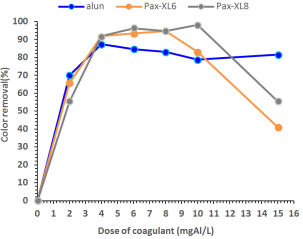
Figure 1. Evolution of color removal as a function of coagulant dosage.
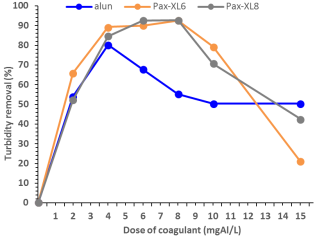
Figure 2. Evolution of turbidity removal as a function of coagulant dosage.
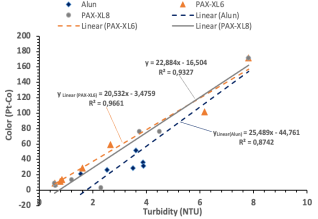
Figure 3. Correlation between color and turbidity.
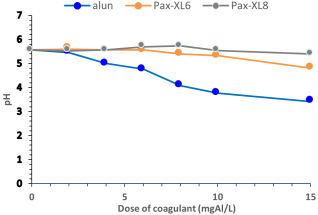
Figure 4. Evolution of pH in treated water as a function of coagulant dosage.
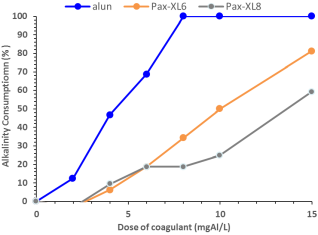
Figure 5. Evolution of alkalinity consumption as a function of coagulant dosage.
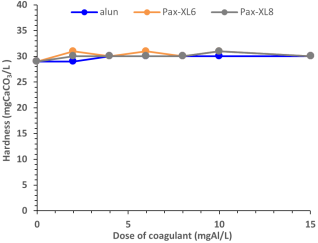
Figure 6. Evolution of water hardness in treated water as a function of coagulant dosage.



 Share This Article
 Twitter
 Linked In
 Facebook
 Copy
Copy Download